



Nitazenes: An Emerging Synthetic Opioid Threat and Why we Must Pay Attention
CONTRIBUTED By
Dr Mohd Farooq Parey ,MD MRCEM,FRCEM ,
Speciality certificate in acute medicine
Specialist Emergency medicine in University Hospital of Morecambe bay
NHS foundation Trust ,UK
The global opioid crisis is entering a new and more dangerous phase with the emergence of nitazenes, a group of highly potent synthetic opioids that have been linked to increasing numbers of overdose deaths in Europe and North America. Although relatively unfamiliar to many healthcare professionals and members of the public, nitazenes represent a significant public health threat that warrants urgent attention.
As patterns of drug production and trafficking evolve globally, regions such as Kashmir must remain vigilant to the possibility of these substances entering local illicit drug markets.
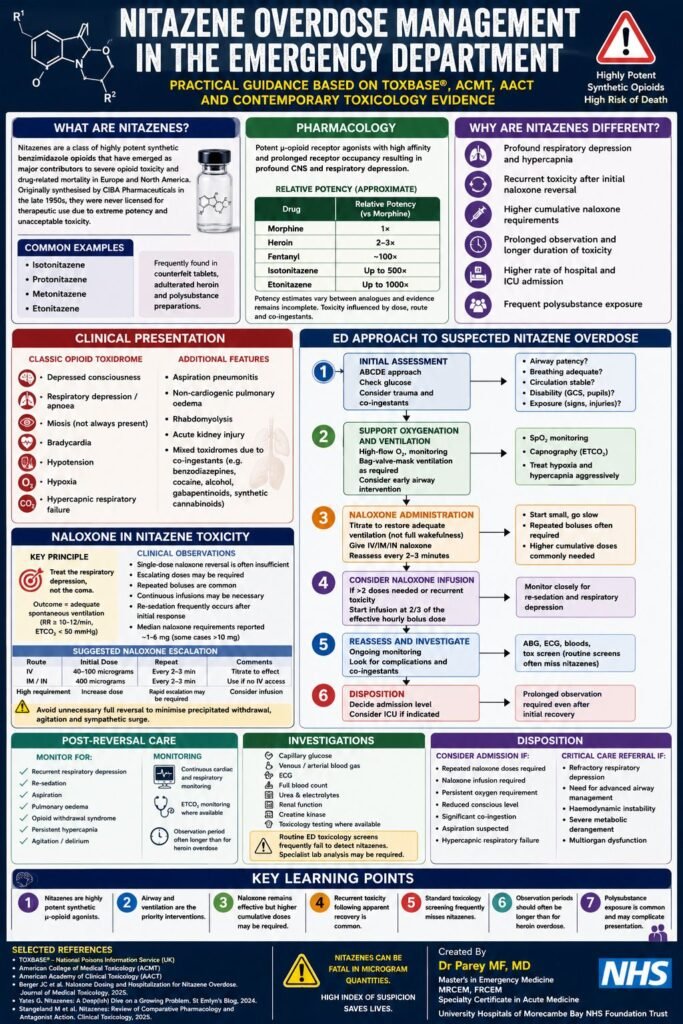
Nitazenes were first synthesised in the 1950s during pharmaceutical research aimed at developing powerful analgesics. However, due to their extreme potency and risk of fatal respiratory depression, they were never approved for clinical use. For decades they remained largely confined to scientific literature until they re-emerged in illicit drug markets in recent years. Since 2019, multiple nitazene compounds, including isotonitazene, protonitazene, and metonitazene, have been detected in Europe, the United Kingdom, North America, and Australia, where they have been associated with clusters of overdose deaths.
A major factor behind their emergence appears to be changes in the global heroin supply chain. Afghanistan has historically been the world’s largest producer of illicit opium, supplying a substantial proportion of the heroin consumed across Europe and parts of Asia. Following the Taliban’s return to power in 2021 and the subsequent ban on poppy cultivation in 2022, opium production declined dramatically. While the long-term effects continue to be studied, experts believe that reduced heroin availability has encouraged criminal networks to seek synthetic alternatives that are cheaper to manufacture, easier to transport, and more profitable. Synthetic opioids such as nitazenes require no agricultural cultivation and can be produced in small quantities capable of generating thousands of doses.
What makes nitazenes particularly alarming is their potency. Depending on the specific compound, some nitazenes may be many times more potent than fentanyl and hundreds to thousands of times stronger than morphine. Such potency means that even a tiny measurement error during illicit manufacture can result in fatal overdose. Unlike traditional heroin, where users may have some familiarity with expected effects, nitazenes can cause rapid respiratory arrest with very small doses.
The danger is compounded by the fact that users often do not know they are taking nitazenes. These substances have been found mixed with heroin, benzodiazepines, cocaine, counterfeit opioid tablets, and even recreational drugs sold as entirely different substances. Consequently, overdose can occur in individuals who have little or no opioid tolerance. This hidden contamination has become a major concern for public health authorities across Europe.
For healthcare professionals, recognition of nitazene toxicity is increasingly important. Clinical presentation is similar to other opioid overdoses, including reduced consciousness, pinpoint pupils, respiratory depression, cyanosis, and, in severe cases, cardiac arrest. However, several reports suggest that higher or repeated doses of naloxone may be required to reverse toxicity. Furthermore, routine toxicology screening frequently fails to detect these compounds, meaning that many cases may be misclassified as unexplained opioid overdoses. Emergency physicians, anaesthetists, intensivists, toxicologists, and prehospital clinicians should maintain a high index of suspicion, particularly when patients demonstrate profound opioid toxicity with negative standard drug screens.
The relevance of this issue extends beyond Europe. Kashmir has witnessed growing concerns regarding substance misuse over the past decade, particularly among young people. While opioids currently encountered in the region are predominantly traditional preparations, changing trafficking routes and global drug market dynamics mean that synthetic opioids may eventually appear in South Asian markets. The region’s proximity to historical drug trafficking corridors, combined with increasing international connectivity, makes early awareness essential. Waiting until nitazenes are widely detected locally would represent a missed opportunity for prevention.
Public awareness is equally important. Families, educators, religious leaders, community organisations, and healthcare workers all have a role in recognising the dangers posed by synthetic opioids. Young people should be educated about the risks of consuming pills or powders obtained from unregulated sources, as these may contain substances far more potent than expected. Harm-reduction measures, including wider availability of naloxone, timely access to addiction services, and community education programmes, should be strengthened wherever possible.
Healthcare systems must also prepare. Improved toxicology surveillance, clinician education, enhanced overdose reporting systems, and collaboration between public health authorities and law enforcement agencies will be critical in identifying emerging trends before they become established public health crises. Lessons from the fentanyl epidemic in North America demonstrate the devastating consequences of delayed recognition and response.
Conclusion
Nitazenes are among the most potent synthetic opioids ever encountered in illicit drug markets and are increasingly implicated in fatal overdoses worldwide. Although not yet a major problem in Kashmir, global drug trends suggest that no region can afford complacency. Early awareness among healthcare professionals, policymakers, and the public offers the best opportunity to prevent this emerging threat from becoming the next chapter in the global opioid crisis.
Join the mailing list!
Get the latest articles delivered right to your inbox!
