



Fast Food and Inflammatory Bowel Disease: Understanding the Possible Link
Contributed by
Mujahida Parveen
Freelance Health Content Writer specializing in health,
wellness, nutrition, preventive healthcare, and medical technology.
Email: mujahidaparveen2509@gmail.com
Upwork Profile: https://www.upwork.com/freelancers/~0101e0885578736b2b
Fast food has become a regular part of modern diets because it is convenient, inexpensive, widely available, and often appealing in taste. Burgers, fried chicken, pizza, French fries, processed meats, sugary drinks, packaged snacks, and other highly processed foods are now commonly consumed in many parts of the world. At the same time, inflammatory bowel diseases (IBD), particularly Crohn’s disease and ulcerative colitis, have become an increasing concern in many populations.
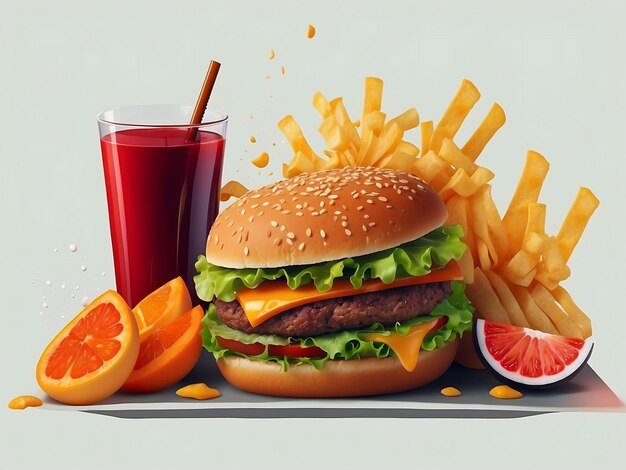
IBD is a group of chronic conditions in which the digestive tract becomes inflamed. Crohn’s disease can affect different parts of the digestive tract, while ulcerative colitis mainly affects the colon and rectum. The exact causes of IBD are complex and involve interactions between genetics, the immune system, the gut microbiome, and environmental factors. Diet is increasingly being studied as one of these environmental influences.
How Can Fast Food Affect the Gut?
Many fast foods are considered ultra-processed foods because they may contain multiple industrial ingredients, refined carbohydrates, added sugars, unhealthy fats, salt, and various additives. They are often low in dietary fibre compared with whole foods such as fruits, vegetables, legumes, and whole grains.
A diet dominated by highly processed foods may influence the environment of the intestine in several ways. A low-fibre dietary pattern can reduce the amount of beneficial material available for gut bacteria to produce short-chain fatty acids, which play important roles in maintaining intestinal health. Meanwhile, some components commonly found in ultra-processed foods may influence the gut microbiome and intestinal barrier.
These changes are important because the gut microbiome and intestinal barrier are closely connected to the regulation of the immune system. Disturbances in this relationship may contribute to intestinal inflammation in people who are genetically or otherwise susceptible to IBD.
What Does Research Show About Fast Food and IBD?
Research increasingly suggests an association between higher consumption of ultra-processed foods and the development of IBD. A large prospective study involving more than 116,000 adults from 21 countries found that people consuming higher amounts of ultra-processed foods had a greater risk of developing IBD during follow-up. The association was observed for both Crohn’s disease and ulcerative colitis.
More recent evidence has also specifically examined fast-food consumption. A 2025 case-control study and meta-analysis reported an association between frequent fast-food consumption and both ulcerative colitis and Crohn’s disease. However, observational studies can identify associations but cannot by themselves prove that fast food directly causes IBD.
This distinction is important. IBD is not caused by one particular food. Instead, dietary habits may be one part of a much larger combination of genetic, environmental, immune, and microbial factors.
Has Fast Food Contributed to the Increase in IBD?
The worldwide increase in IBD has occurred alongside major changes in lifestyle and dietary patterns, including greater availability and consumption of highly processed foods. IBD has historically been more common in industrialised countries, and its occurrence has also been increasing in newly industrialised regions.
The growing consumption of ultra-processed foods is therefore an important area of research. Studies suggest that diets high in these foods may be associated with a greater risk of developing IBD, but researchers are still investigating exactly which dietary components are responsible and how they interact with the gut microbiome and immune system.
It would therefore be inaccurate to say that fast food alone has caused the increase in IBD. Instead, increasing consumption of highly processed foods may be one environmental factor contributing to changing patterns of intestinal disease.
What Can People Do?
Reducing dependence on fast food does not mean that every processed food must be completely avoided. A healthier dietary pattern can focus more on whole and minimally processed foods, including vegetables, fruits, whole grains, legumes, and other nutritious foods that are appropriate for an individual’s health needs.
People who already have IBD should be particularly careful about making major dietary changes without professional advice. Foods that trigger symptoms can differ considerably between individuals, and dietary needs may change during active disease and remission.
A balanced diet, regular medical care, appropriate treatment, physical activity, adequate sleep, and other healthy lifestyle habits can all play a role in overall health.
Conclusion
Fast food and other ultra-processed foods are increasingly being studied for their possible relationship with inflammatory bowel disease. Current evidence suggests that higher consumption of ultra-processed foods and frequent fast-food intake may be associated with an increased risk of Crohn’s disease and ulcerative colitis.
However, IBD is a complex disease and cannot be attributed to fast food alone. More research is needed to determine which ingredients or dietary patterns are most important and how they interact with genetics, the gut microbiome, and the immune system.
For now, reducing reliance on highly processed foods and choosing a varied diet based more heavily on nutritious, minimally processed foods may be a sensible approach to supporting digestive and overall health.
References
- Narula N, Wong ECL, Dehghan M, Mente A, Rangarajan S, Lanas F, et al. Association of ultra-processed food intake with risk of inflammatory bowel disease: prospective cohort study. BMJ. 2021;374. doi:10.1136/bmj.n1554.
- Arafa A, AlBassam AM, Alassaf M, AlBassam FA, Alzahrani F, Alsaif FB, et al. The Association Between Fast Food Consumption and Inflammatory Bowel Disease: A Case-Control Study and Meta-Analysis. Journal of Clinical Medicine. 2025;14(12):4141. doi:10.3390/jcm14124141.
- El-Hussuna A, Hauer AC, Karakan T, Pittet V, Yanai H, Devi J, et al. ECCO consensus on management of inflammatory bowel disease in low- and middle-income countries. Journal of Crohn’s and Colitis. 2026;20(1). doi:10.1093/ecco-jcc/jjaf125.
Join the mailing list!
Get the latest articles delivered right to your inbox!
